Health and Safety Policy — Skip Hire Stoke Newington
 This Health and Safety policy sets out the commitment of our skip hire and rubbish removal operation to manage risks, protect staff, contractors and the public, and ensure compliance with applicable safety standards. Our approach covers onsite skip placement, waste loading and transport across our service area to ensure a consistent, risk-based standard of operations for Skip Hire Stoke Newington and related waste collection work.
We recognise our duty to maintain a safe workplace and a safe working environment for all workers, visitors and members of the public who may be affected by our activities. Our primary objectives are to prevent injury and ill health, to minimise pollution and to operate reliable waste removal services that meet statutory obligations and recognised industry practice.
 The policy applies to all employees, drivers, subcontractors and any partners engaged in skip hire, rubbish clearance or waste transport tasks. Responsibilities are allocated at all levels: senior management retains overall accountability, supervisors manage day-to-day risk control, and every individual is encouraged to take personal responsibility for safe work. We expect adherence to safe systems and reporting processes.
Risk Management, Training and Safe Systems
We follow a planned risk management cycle that includes hazard identification, risk assessment, implementation of controls and regular review. Typical hazards associated with skip hire and rubbish removal include manual handling, vehicle movements, traffic interactions, hazardous and unknown waste, working in confined spaces and manual loading. Control measures include safe positioning of skips, use of exclusion zones, and strict vehicle reversing procedures.
 Staff training and competence are central: all drivers and operatives receive induction training covering site safety, lifting techniques, PPE use, traffic management and emergency procedures. Training is refreshed periodically and when new risks are identified. Records of training, licences and toolbox talks are maintained.
We operate safe systems of work for operations such as skip delivery and collection, on-site loading, segregation of waste types and management of hazardous items. Where works are undertaken on public highways or shared spaces, we implement traffic marshals, signage and barriers to protect pedestrians and road users.
Personal Protective Equipment, Equipment and Vehicles
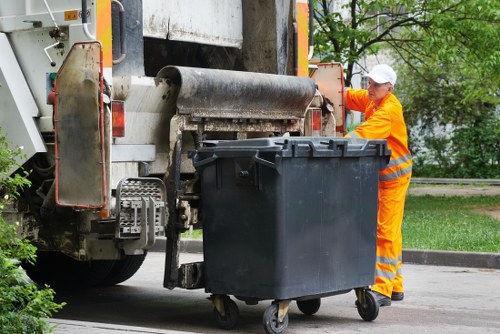 Appropriate personal protective equipment (PPE) is provided and must be worn where required. This includes high-visibility clothing, safety boots, gloves, eye protection and respiratory protection where dust or fumes are present. Supervisors are responsible for ensuring PPE is fit for purpose and maintained.
Vehicle safety and maintenance form a core element of our policy. Daily vehicle checks, scheduled servicing, secure load restraint and safe loading/unloading procedures reduce the risk of incidents during rubbish collection and skip transport. All drivers hold relevant licences and are trained in defensive driving and safe reversing practices.
 Waste classification and handling processes ensure that hazardous materials are identified, segregated and managed by suitably qualified personnel. We prohibit placing unknown hazardous substances in skips; any suspect material is isolated and escalated for specialist handling. Our waste transfer practices aim to prevent environmental harm and accidental release.
Emergency preparedness includes site-specific emergency plans, incident reporting protocols and first-aid provision. Accidents, near misses and dangerous occurrences are reported promptly, investigated and corrective actions implemented. Lessons learned feed back into procedures to prevent recurrence.
Monitoring and review are continuous: we perform regular audits, inspections and performance reviews to check compliance and effectiveness. Key performance indicators include incident rates, training completion, vehicle inspection records and audit outcomes. Senior management reviews policy performance at scheduled intervals and when operational changes occur.
We maintain clear communication channels for health and safety matters. Staff are encouraged to raise concerns and contribute to risk assessments. Consultation with employees and contractors ensures realistic controls and ownership of safe working practices. Specific responsibilities are documented within job descriptions and operational briefings.
Key elements of our safe working commitments include:
- Preventing harm through active risk management and safe systems;
- Complying with relevant health, safety and environmental regulations;
- Training and competence assurance for all operational staff;
- Maintaining vehicles and equipment to safe standards;
- Managing hazardous waste responsibly and lawfully.
We expect all personnel to cooperate with this policy and to adopt a proactive safety mindset when delivering skip hire, rubbish removal and waste collection services. Compliance with these principles protects people, property and the environment while supporting efficient service delivery.
Implementation of this policy is supported by documented procedures, training records and operational checklists. Management commits necessary resources to maintain safe working conditions and continuous improvement. Periodic policy reviews will address evolving risks, regulatory changes and feedback from operational experience.
This policy is a living document and is made available to all employees and stakeholders involved in our skip hire and clearance operations. Adherence to the policy is mandatory and monitored to ensure that safety remains a core value in everyday work.
Signed on behalf of management: the senior management team maintains oversight and will ensure this Health and Safety policy is enforced and updated as required to deliver safe, reliable skip hire and rubbish services throughout our service area.